
Moazzam Begg: “It wasn’t a life; it was an existence”
By Will Fremont-Barnes
Taking a moment’s pause, both for effect and for the sake of accuracy, Moazzam Begg lists the various locations at which he has been imprisoned. “I have now been held, I think, in at least four police stations, three military detention camps, one secret prison and a maximum security British prison. I’ve never had my day in court. That’s unbelievable.”
In one sense it is unbelievable, and yet in another, when considering the heavy-handed response to the attacks on September 11, 2001, it is entirely believable. Begg, whilst hardly about to indulge in self-pity, either during his address at the Union Society or in this interview afterwards, presents himself as the victim of a war on terror in which the United States and its allies have resorted to the same unscrupulous methods used by the terrorists themselves. Incarcerated for more than two years in the world’s most notorious prison, he is ideally placed to speak out on behalf of those presently detained without charge.
What comes across as he recalls his time spent at Guantanamo Bay is not the squalid conditions or the terrible human rights abuses, although these have left an indelible mark, but the sheer boredom of the place. “Other than to look forward to those two meals that you got, there wasn’t really much to do. There were no radios, newspapers or televisions, and so I would read what few books we were allowed to read, write some poetry, make lists of things I wanted to do, lists of books I wanted to read. That was pretty much it.” Shaking his head, he adds poignantly, “it wasn’t a life; it was an existence.”
There were some silver linings from this “existence”. Rather than his time in Gitmo radicalising him, fostering a deep-rooted hatred towards the US, Begg forged relationships with his oppressors that were as meaningful as they were unlikely. “Sometimes I’d wait for hours, sometimes days, sometimes weeks, for those soldiers I’d built up a rapport and friendship with. I really looked forward for their turn to come.” Just as he clung onto his humanity whilst locked up, fraternising with the supposed enemy, so too was his religious faith important despite the uncertainty. Begg recalls vividly the contempt with which many of his guards viewed Islam, yet he still began every day with the “dawn prayer”.
Institutionalised discrimination against Muslims is something that Begg has identified, and railed against, since his release. “The government has always refused to accept that foreign policy has been a factor in causing the alienation and radicalisation of people. However, one of the things that’s causing that now is internal policy.” He worries that sweeping anti-terror laws passed by successive governments make the vast majority of law abiding Muslims feel persecuted. This is, in Begg’s view, a pressing issue. “I know that there are numbers of people from the Muslim community who are leaving the UK, who have left the UK, saying ‘whichever direction this country’s going in, it’s not one that I recognise or want to be a part of’”.
After everything he has been through, is leaving the UK a course of action that Begg, born and raised in Birmingham, has considered taking? He is adamant in his refusal even to countenance such an idea. “I don’t want to think that’s an option for me, because I think there’s still a great deal of good in this country that we simply need to tap into.” Begg is committed to repairing the damage that has been done to the relationship between the Muslim community and wider society over the past few years, but is conscious that more effective integration requires effort from both sides. He puts his finger on a pertinent problem. “Many people from the cloistered Muslim communities never go out of the areas where they live and actually speak to people where they’d be surprised to hear their views. More of that needs to happen, and that’s what I try to do.”
Despite this attempt to bring about reconciliation through dialogue, Begg found himself back in jail last year on suspicion of terrorist activity relating to Syria. These charges were dropped and, as he is quick to draw attention to, the police concluded, “there was no threat to the safety or security of the British people”. Begg essentially accuses the government of taking revenge against him, suggesting that he had been “expecting” this type of arrest since he “fought a case against the government and won a substantial compensation from it. I felt that they really didn’t like that”.
Whilst he described the ordeal as being “extremely unpleasant”, it gave him a level of insight into the minds of those who had gone out to fight on behalf of Islamic State, only to be prosecuted on their return. “I was held in Belmarsh prison with numerous people who’d returned from Syria. Very importantly, they’d returned because of ISIS. When they saw that ISIS was trying to impose itself on people in a very brutal way, they literally put down their weapons and wanted to come back home.” For Begg, prosecuting such people makes “absolutely no sense at all”. His bewilderment is only compounded considering that “the British government was supporting the Free Syrian army up until January 2014 with non-lethal aid, and the Free Syrian army fought alongside al-Qaeda and shared resources with it”. He continues, “if people are going to be prosecuted, the government needs to take a good and hard look at itself and what it was doing”.
This is not the first occasion on which the government has been guilty of throwing its support behind a dangerous group. When the Soviets embarked upon their doomed invasion of Afghanistan during the 1980s, the British government assisted the resistance movement. Begg emphasises this British support when pressed on the nature of his visit to a training camp in the early 1990s. “This was just a few years after Britain had been training the mujahedeen”, he points out, “so it wasn’t something that seemed very distant”. Indeed, to illustrate how far this was a “different time completely”, Begg reveals himself to be something of a film buff by outlining the plot of Rambo III. “Silvester Stallone goes to Afghanistan and the mujahedeen fighters are lionised”.
Ultimately, fighters trained at such camps went on to wage war against the West by committing the worst terrorist atrocity ever recorded on US soil. Begg was caught in the crossfire. For all the violence and boredom detailed earlier, he becomes most animated when discussing the impact on his family. Resuming life as normal, he thinks, “is probably the most difficult part of the whole process”. How so? “It is traumatising for you as the individual. What you don’t see is the trauma of the family, you don’t recognise their suffering in all of this. There can be some very difficult times.”
Whether he is talking about his disrupted family life or the inadequate legal protection he received, Begg remains driven by an unresolved sense of injustice.
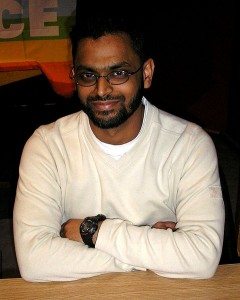
Photograph: Wikipedia Commons


