
Students slate Grayling’s New College of Humanities
by Emma Charles
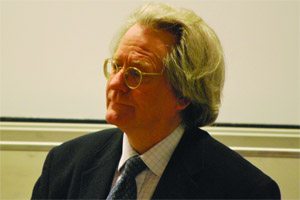
Students and lecturers have rushed to criticise A. C. Grayling’s plans to open a London-based higher education institute.
The Philosopher’s New College of the Humanities (NCH) will open in 2012 and has a founding ‘Professoriate’ of 14 academics, including Richard Dawkins and Niall Ferguson. Its courses will include Law and Economics single honours degrees, and Joint Honours programmes in which students will study two subjects from History, Philosophy and English Literature. Students will also take science literacy and critical thinking modules and learn “professional skills”, including the principles of accountancy. The College was immediately deemed an “atheists’ college” by the media due to its lack of Theology department and the fact that two of the Professors are evolutionary biologists.
Despite initially publicising itself as an University College, NCH will not have degree-awarding powers or research students, and will instead prepare students to take the University of London’s International Programme (ULIP) exams, which are distance-learning degrees studied by more than 50,000 students. The majority of ULIP students pay less than £1,500 per year for their course materials and examination fees.
NCH students, however, will be charged fees of £18,000 a year for the three year courses – double the maximum £9,000 which can be charged by public universities. They will leave the College with an ULIP degree and a separate New College Diploma which the College claims will “reflect the greater richness of [students’] studies.” The students will not be eligible to join University of London sports teams, and will have to pay additional fees to use the University library and student union facilities. The College therefore stands in stark contrast to Durham University, which is using its research-led culture and wide range of extra-curricular activities to attract students.
Once living costs are factored in, students will spend more than £28,000 per year of their studies, just £2,000 less than the cost of boarding fees at Eton.
Professors at Birkbeck College, which Grayling has resigned from to set up NCH, condemned the fees as a move to “foreclose access to higher education for all those whose bank accounts are not overly provided.”
NCH students will not have access to government tuition fee or maintenance loans, and only one fifth of the students will receive scholarships. Boris Johnson praised Grayling for creating a college for “the cream of the [Oxbridge] rejects”, but it is unlikely that many students would prefer to pay full fees at NCH when an Oxbridge education itself will only cost £9,000 a year.
Grayling has been further criticised for encouraging the commercialisation of the British Higher Education sector by promoting the celebrity status of the Professoriate, and relying on publicly-funded resources such as the University of London’s library and syllabi. Indeed, Grayling himself argued in 2009 that university education should be provided “free of charge to all those suitably qualified for it” and denounced the NUS’ focus on contact hours when evaluating courses. It appears that these qualms have been swiftly forgotten, as the New College of the Humanities website cites increased contact hours and tutorials by “14 of the world’s topic academics” as a core part of its appeal.
However, it has emerged that students will only receive a single one-to-one tutorial each week, which will be not given by a Professor. Two of the founding History Professors, Sir David Cannadine and Linda Colley, will only give one lecture each in the College’s first academic year. Their profiles on the College website were quickly amended to state that they will be “visiting Professors”.
It was also revealed that almost half of the Professors will teach on the “science literacy” and “applied ethics” diploma courses only, raising fears that students will be paying extremely high fees to hear lectures which are already available on YouTube. Despite Grayling likening the Diploma courses to American Liberal Arts programmes, students will not be required to have any science qualifications except a grade C in GCSE maths, and will therefore only be given lectures on popular science and “professional skills” rather than taking advanced Maths and science courses.
Whether the College will be a success or not depends upon whether a few hundred sixth formers are willing to sacrifice their wider university experience and convince their parents to invest heavily in their education. Yet with the job market becoming ever more competitive and employers increasingly looking for students to have the teamwork and leadership skills which are most commonly developed through participation in sport and societies, it seems that NCH’s students may find getting a return on their investment is harder than they thought.