
Showing art snobbery the gallery door
by David Siesage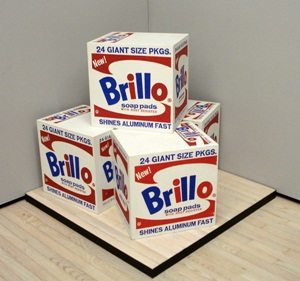
What is art? Unfortunately for mankind, this perennial question seems to be impossible to answer. Debate has merely intensified throughout the last century, in response to the rise of contemporary art. Art covers such a broad spectrum that any attempt at a definition automatically limits and restricts some aspect of it. It has no single definition, and it is pointless trying to impose one on it.
Art critic Arthur Danto, on seeing Andy Warhol’s “Brillo Boxes”, proclaimed in a style usually reserved for a monarchical death, “Long live art.” Art as we knew it is dead. No longer is it simply a representation of the world as we see it; no longer are there any restrictions. Art is free, and we should not limit this freedom.
Yet Nicholas Penny, respected art historian and director of the National Gallery, controversially dismissed Contemporary Art in recent interviews with The Art Newspaper and Freize Masters.
Video can be one of the most powerful forms of contemporary art, but Penny has cast it aside as merely ‘an incompetent form of films.’ Whilst this may apply to some examples of video art, it is wrong to discount the medium entirely. Nowadays, “the radical pluralism” of art (a phrase used by Danto), means that no one can be an expert on all fields, and this is evident in Penny’s sweeping dismissal of an entire genre.
Penny is equally dismissive of the contemporary art wings to be found in many galleries, talking of their ‘orthodoxy and predictability’: ‘the same white walls with the same loud, large, obvious, instantly recognisable products lined up on them.’
Surprisingly, given these comments, 2012 is a year of several contemporary art exhibitions at the National Gallery. Having hosted a multimedia exhibition, “Metamorphosis: Titian 2012”, they are due to show Richard Hamilton’s (undeniably contemporary) final works at the end of the year, alongside the work of some contemporary photographers in “Seduced by Art: Photography Past and Present”.
Hypocrisy? No. It seems Penny was simply making a rather arrogant statement that he could do it better than the dedicated contemporary art wings of other galleries. He confirmed that they ‘won’t be giving contemporary art quite such a concentrated presence at the museum in the future, but what it does signal is that there are more ways in which we can show contemporary art.’
Given Penny’s reluctance to put on ‘blockbuster’ exhibitions, maybe it is best that the National Gallery do not attempt to showcase contemporary art, and instead leaves this to the Tate Modern and their staggeringly successful temporary exhibitions.
A populist attitude may in fact be best for contemporary art – it is art that enrages and inflames; it makes people think, and it makes people question their fundamental views on art. The more people who have access to these works, the better.
Penny has also called on artists to learn lessons from the past masters, and in doing so encouraged inertia and discouraged advance. Why criticise the fact that “so many of the conventions and techniques of western European art now seem distant or alien to artists working today”? If conventions die out, let them. They are natural things which are always changing. Like changes in language, convention in art is an organic process, and trying to cling on to the old way merely discourages innovation.
There are still artists emulating the great masters, using watercolours and painting on canvas, but this has been done before. That does not mean it should not be continued, but we should not be surprised that new forms of art and contemporary work is given a disproportionately large allowance in galleries. It is developing; it needs attention, interest, and innovation to continue doing so. What it does not need is an art world heavyweight dismissing it entirely. Penny may be ‘uneasy with some aspects of the legacy of Marcel Duchamp’, but he should be careful in making sweeping public criticism of it.