
Giannini exits Gucci
By Alexandra Webber Isaacs
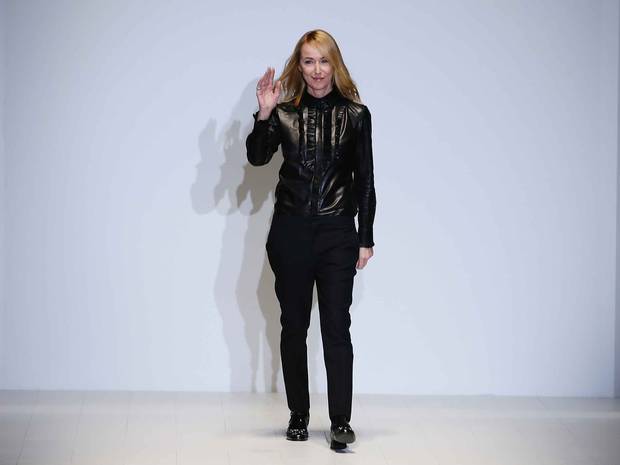
The models have been cast. The clothes are on the racks, waiting for their début on the Gucci Autumn/Winter 2015 catwalk. And creative director, Frida Giannini, leaves the label 10 days before the show – an entire month earlier than planned. So what does Gucci do? It redesigns the whole collection within a little more than a week. The mastermind behind it all? Gucci’s head accessories designer, Alessandro Michele, who, of course, was appointed creative director of the brand just a few days ago. A source from WWD is quoted as saying that the appointment comes at a time where Gucci wants to completely reinvent itself: “It’s as far from the former Gucci as possible. Very young, and a clean break with the past.” Not exactly a compliment to the previous incumbent then.
A little background information is always helpful. Giannini’s long-term boyfriend, Patrizio di Marco, the former CEO of Gucci, was replaced by Marco Bizzarri at the start of January. Speculation is rife that relations between Bizzarri and Giannini must have turned sour a little too early. Beyond this, what we can confirm is that for the past sixteen months or so, the brand has shown little to no financial growth. And when Kering owns you, you know this equals a fast exit.
It wasn’t always the case however. Giannini is sometimes thought of as the boring designer that came after Tom Ford (after those GG G-strings!), but that’s not giving credit where credit’s due. The flora motif, for instance – the one that defined the house whilst she was at its helm, the one that gave birth to the popular ‘heritage’ trend – that was Giannini’s doing. As creative designer of all accessories, she introduced the motif into Gucci scarves in 2004. That very same year, Tom Ford left the company, and her accession to his former role was swift. In 2006, she helmed the brand in its entirety. Gone were the GG motifs, enter Giannini’s vision of a jet-set woman with feminine elegance. More subdued, more wearable, and until recently, very profitable.

Gucci was now doing Bermuda shorts, floral-print everything and skinny cropped trousers (a.k.a the ‘Frida’ pants). Anything remotely reminiscent of Ford exoticism went out the door. A quick glance at any collection between 2006 to 2009 is a case in point. The problem, of course, is that an obviously made-for-the-market collection is not going to be innovative or take sufficient risks. Critics such as Sarah Mower have said as much: “Gucci now is a clearly segmented, businesslike collection with no pretense of being anything other than hip, immediately understandable clothes for a young global audience.”
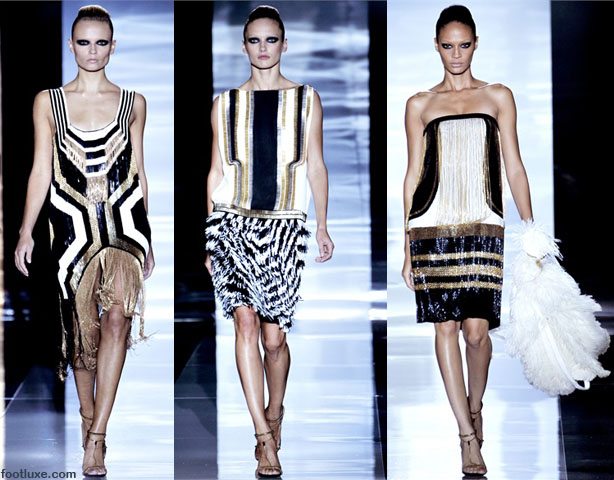
Giannini probably decided that it was time for a change. In Spring 2010 she moved away from the 70s ‘heritage’ feel that had so defined her collections, to a modernist aesthetic. White laser-cut dresses, hints of psychedelic prints, rock-star embellishments. She avoided heritage again in Spring 2012, playing with the 1920s theme. The years to come would set up a customary pattern: marketable, commercial clothing lacking in definitive direction. Spring 2014: mesh-infused athleticism. Fall 2014: the ‘60s. You get the picture – experimentation, slight innovation, but no continuation in an established aesthetic. As creative director she came, fittingly, full circle for her Spring 2015 collection, which marked a return to the her beginnings after a decade – the ‘70s. A decade, then, marked by pieces that were commercially successful but passé. Hedi Slimane, Olivier Rousteing, Nicolas Ghesquière are now dictating how the modern woman should dress, successfully blending a sustained creative vision with innovative collections all aimed at a clientele that demands more.
Giannini didn’t just make her mark (or, perhaps, lack thereof) in clothing collections however. She was instrumental in orchestrating Gucci’s ‘Chime for Change’ project, campaigns that feature a plethora of A-list celebrity faces. Gucci’s take on CSR basically aims to empower female-led projects and promote women’s rights. It will be interesting to see what Michele does with it, seeing as Giannini’s name – and face– is so tied up with the project. Only time will tell, but if his collection for the brand is anything to go by, it’s going to be seriously fresh.
Photographs: independent.co.uk, louloumagazine.com and nowfashionista.com.
