
Did David Cameron deliver?
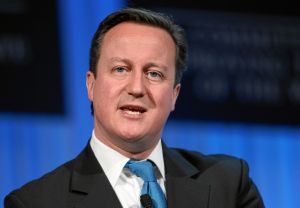
by Michael Laughton
David Cameron is not, this year, a man blessed with good fortune. He faces challenges, which alone, are worrying, but combined, threaten to overwhelm him. Last Wednesday, Cameron took to the stage at the Conservative Party Conference to address party members at a time of continuing struggle for the party.
The most acute pressure on the Prime Minister is to assure his party that he has got a plan to boost the party in the polls, which is tied fundamentally to the state of the economy. Technical recession for three quarters, unemployment stubbornly high at 8% and the deficit, the government’s own metric of success – which is expected to rise this year, not fall – all spell trouble.
The public is starting to take notice of this, prompting many to wonder what on earth the cuts are for if they aren’t even working. While at the beginning of this parliament, it was hoped that the economy would make it possible to loosen the purse strings in time for the election, the government have now had to announce a lengthening of the pain. Cameron needs to show the electorate that there’s a good life waiting after austerity and that it’s coming soon, both for the country’s sake and for his party’s.
On top of all of this, Cameron faced a restive, undisciplined party. His cabinet ministers seem to be operating in self-destruct mode. The Chief Whip is off insulting police officers, the Health Secretary has unwittingly (and one does suspect unwittingly) been drawn into an unprovoked argument over the upper limit on abortion, with all the acrimony that comes with it.
Meanwhile, backbenchers seem keen to aggravate the public, with a handful pronouncing the British as “among the worst idlers in the world”. For bonus points, Cameron needs to prove that he can wrestle the centre ground away from Ed Miliband, even though rumours of frantic rewrites after the latter’s speech tell us he’s been blind sided.
So, a tall order indeed. Did David Cameron deliver?
In his speech, Cameron could not paint a new picture of a Britain for the “want to be better offs”, so instead he simply took the old message and warmed it through. After the obligatory trotting out of the welfare kings and queens – who must by now have joined Mary Poppins in the British pantheon – he offered a Britain which would be for those who work hard and, one can deduce, a Britain that gives the idle a good kick up the backside.
Predictably, this played well with the party faithful and, I suspect, will please the hard-pressed public in the short-term. However, how well it will serve him come the election is doubtful. As the cuts begin to take effect, the public presumption may well swing in favour of their wrongly impoverished workless friends and children, rather than the scroungers they keep hearing about.

Apart from this, a better tomorrow was not forthcoming. The Prime Minister did name check the Education Secretary’s reforms, with their obsession with returning to the good old days of good discipline and even better Latin, and claimed that these would be the foundation of a Britain that could compete in the world.
On this point, the Prime Minister is absolutely right to alert the country to the extent of the rebalancing of the world economy. He did not just stick to the familiar China but brought attention to the likes of Indonesia and Nigeria. However, that is the whole extent to which the Prime Minister spoke well on the economy.
For the rest, all he could manage was to invoke the ever more tired spectre of rising interest rates to press home again the necessity of cutting the deficit. “It is taking longer than we hoped” was all he could offer to assure the country, though this did nothing to explain why his policies mean that the deficit is going up, not down.
Instead, he hoped the people would swallow one more time that it was all Labour’s fault. Two years into the coalition, this line is starting to wear thin. As a solution, all he could offer was yet more cuts, yet again disproportionately targeted toward working-age welfare, the main beneficiaries of which are the working poor, who rightly consider themselves part of the ‘aspiration nation’, not the illusory scroungers.
Cameron needed to get his party back on his message; last week they showed he was on theirs. He gave them what they wanted to hear, with his speech sounding at points like it was meant for Neil Kinnock in the 1980s, not Ed Miliband in 2012.
Many in the country would have been bemused at best to hear the Prime Minister rant about the “left-wing establishment” in education and the Prime Minister’s surreal attack on the “class warfare” of the Labour Party. His only response to Ed Miliband’s bold move last week was a feeble joke: “Labour are the party of one notion: borrowing.” The laughter rang in the conference but will soon be hollow if the growth and jobs situation remains uncertain.
The speech did, however, reveal one thing. The Prime Minister has thrown his government at the mercy of events. His inability to seize the initiative from Ed Miliband shows that he has run out of ideas and is quickly running out of time.
Cameron’s anchoring of his government to austerity has left him with no room to manoeuvre. His only option is to cross his fingers and hope that the economy picks up. If it does, this may yet all feel like a bad dream. If it doesn’t, this speech may be remembered as the point that David Cameron lost the ability to change the government’s fortunes.