
Delayed Take-Off: London Airport Expansion
by Alistair Symes
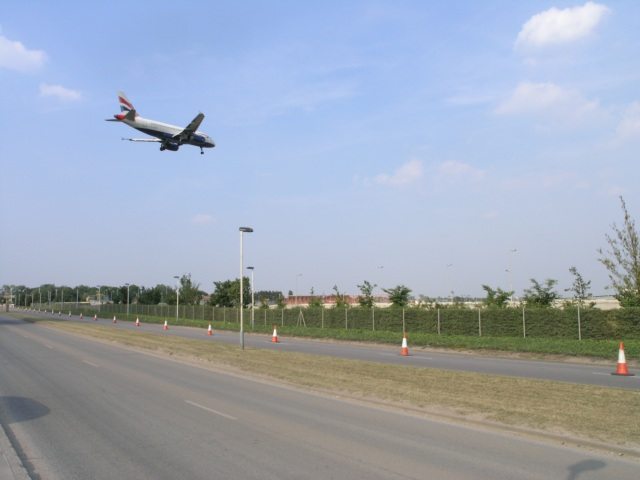
The establishment of the Davies Commission, to investigate the best option for the future of London’s airports, has been a highly political move. The Mayor of London, Boris Johnson, declared the government’s decision a ‘fudge’. The Conservative Party, which promised in its 2010 manifesto to prevent the creation of a third runway at Heathrow, has successfully prolonged a decision until after the next election in 2015. By doing so, David Cameron has avoided a political U-turn on Heathrow during this government.
Given the state of Britain’s economy and the inadequacy of London’s current airport capacity, the government realised it could not simply ignore the issue. A recent report by Heathrow Airport argued that Britain is losing an estimated £14 billion a year in lost trade because of its airport capacity. Heathrow Airport, which operates at 99% capacity and has just two runways, risks falling behind European rivals in Paris, Amsterdam and Frankfurt. Increasing demands to travel to new destinations in emerging markets is exposing the limits of Heathrow’s destinations. Heavy snowfall this winter has seen Heathrow struggle to cope with a backlog of flights, with up to a tenth of all flights per day cancelled.
But the government’s decision to investigate potential options for airport expansion is costing the British economy valuable time. If the commission was to recommend a third runway at Heathrow, it could be at least ten years before it is actually built. Last week, a cross-party group of politicians wrote to Transport Secretary Patrick McLoughlin to urge the government to bring forward the Davies report to before the next general election. This would allow the electorate to know whether or not they were voting for a third runway at Heathrow in 2015.
Boris Johnson had led calls for a new airport to be built in the Thames Estuary. This ambitious project would satisfy the 700,000 residents that currently live under the Heathrow flight path, and its four runways could provide an even larger capacity than a three-runway Heathrow. But the airport would cost an estimated £70 billion to build, and airlines such as British Airways would be forced to relocate across the capital. A report for the Commons Transport Committee has warned that a ‘Boris Island’ airport would not be ‘commercially viable’, and would pose a huge risk to private sector investors. The project would rely on higher passenger numbers and more costly fares to help pay for it.
The Davies Commission is also investigating the option of expanding Gatwick and Stansted airports, which have more potential for growth. However a large amount of Heathrow’s revenue is taken from passengers using the airport as means to transit on to another destination. A third of people flying to Heathrow are connecting passengers, and expanding a rival airport would make flight connections more difficult. Cities such as Dubai have profited from having flights to all major routes connect in a ‘single hub’ airport.
Expanding Heathrow would allow London to prosper from having a ‘single hub’, and would not create the same financial risk for investors as a new airport in the Thames Estuary. Furthermore, noise pollution is being tackled by two major technological innovations in aircraft manufacture. Firstly, aircraft engines are being designed to be quieter, and airlines benefit from cheaper landing fees with quieter planes. Secondly, more reliable satellite navigation is allowing planes to fly closer together, which means more flights can be scheduled into daylight hours. If a third runway is given the green light, improvements in noise pollution may be visible by the time it is operational.
But for now, politics has postponed a quick solution to airport capacity. The decision on the future of London’s airports has been taken away from the government, and given to the former head of the Financial Services Authority, Sir Howard Davies. It will be the responsibility of the next government to act on his conclusions.
Photography: Creative Commons