
Van Gogh to Kandinsky: Symbolist Landscape in Europe 1880-1910
Many people, I am sure, might be put off this exhibition upon reading the word ‘landscape’ in the title, imagining repetitive and stereotypical scenes of lakes and forests. However, be not afeared; this collection is not as predictable as you may envisage, being the first ever exhibition dedicated purely to symbolist landscapes. The exhibition explores the way in which artists using symbolism in the late 19th Century responded emotionally and imaginatively to their surroundings, and features not only prominent names from the time, such as Vincent Van Gogh and Edvard Munch, but also introduces less well known artists from across Europe.
The works are organized thematically: ‘Arcadia’, contains work symbolising the anxiety caused by the changes during this era of industrial growth; ‘Moods of Nature’ presents landscapes desperate to show the spectator more than just the facts of nature, but the feeling inherent in the scenes too; ‘Dreams and Visions’ includes pieces in which the artist projects their emotions, or the emotions of those depicted, onto the landscape; ‘Silent Cities’ focuses on the artists’ representations of industrialisation; ‘Rhythms of Nature’ shows different symbolist presentations of the sun in a time that saw new scientific discoveries; ‘Towards Abstraction’ incorporates pieces on the border between symbolism and abstraction, as artists began to experiment by linking their paintings to poetry and music.
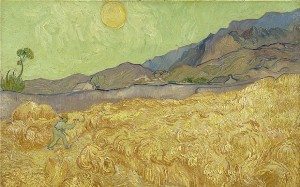
The exhibition illustrates how artists began to explore their emotions through portrayals of the world around them. Van Gogh’s masterpiece ‘Wheatfield with a Reaper’ (1889) is one of the best examples of this. The scene shows the view from the artist’s window after he had admitted himself to hospital in Saint-Rémy due to his mental health problems. The dramatic colour and twisted texture of the piece prove how Van Gogh’s feelings of inner turmoil and agony are translated onto the landscape, and shows how one’s feelings influence not only what one sees, but how one expresses this.
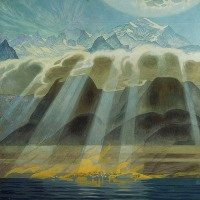 One of the merits of the exhibition is the way in which it integrates well-known artists such as Van Gogh with lesser-known names. Danish artist, Jens Ferdinand Willumsen paints a striking image of ‘Sun Shining on the Southern Mountains’ (1902). The power of the sun breaking through threatening mountains implies the impotence of man in comparison to the strength of nature. In fact, it could be said that the exhibition implores the spectator to stand in awe of nature, with all of the artists depicting it as supreme and mysterious, despite the vast range of emotions displayed throughout the exhibition. Thus, the exhibition shows how nature is at times a source of solace or anger, as if it exudes human emotions and the power of a god.
The collection is evidence that symbolist painting goes further than just observing the world, but allows artists to express what they see based on their emotions. Claude Monet believed that ‘it’s on the strength of observation and reflection that one finds a way’, however the exhibition proves that Symbolist landscapes develop this idea to show that observation and reflection of the outside world is in harmony with observation and reflection of the inner self.
‘Van Gogh to Kandinsky: Symbolist Landscape in Europe 1880-1910’ is showing at the Scottish National Gallery until 15th October.