Trident and the politics of defence
By Piers McKenzie Baker
Defence Secretary Michael Fallon has commanded an all-out Tory assault on Ed Miliband, claiming that he would stab Britain in the back over its nuclear deterrent by refusing to rule out a Faustian pact with the SNP after the election. Whilst media attention has been focused on the nature of Fallon’s rhetoric and his reference to the drama between the two Miliband brothers, what is perhaps more intriguing is the issue behind his comments: Trident.
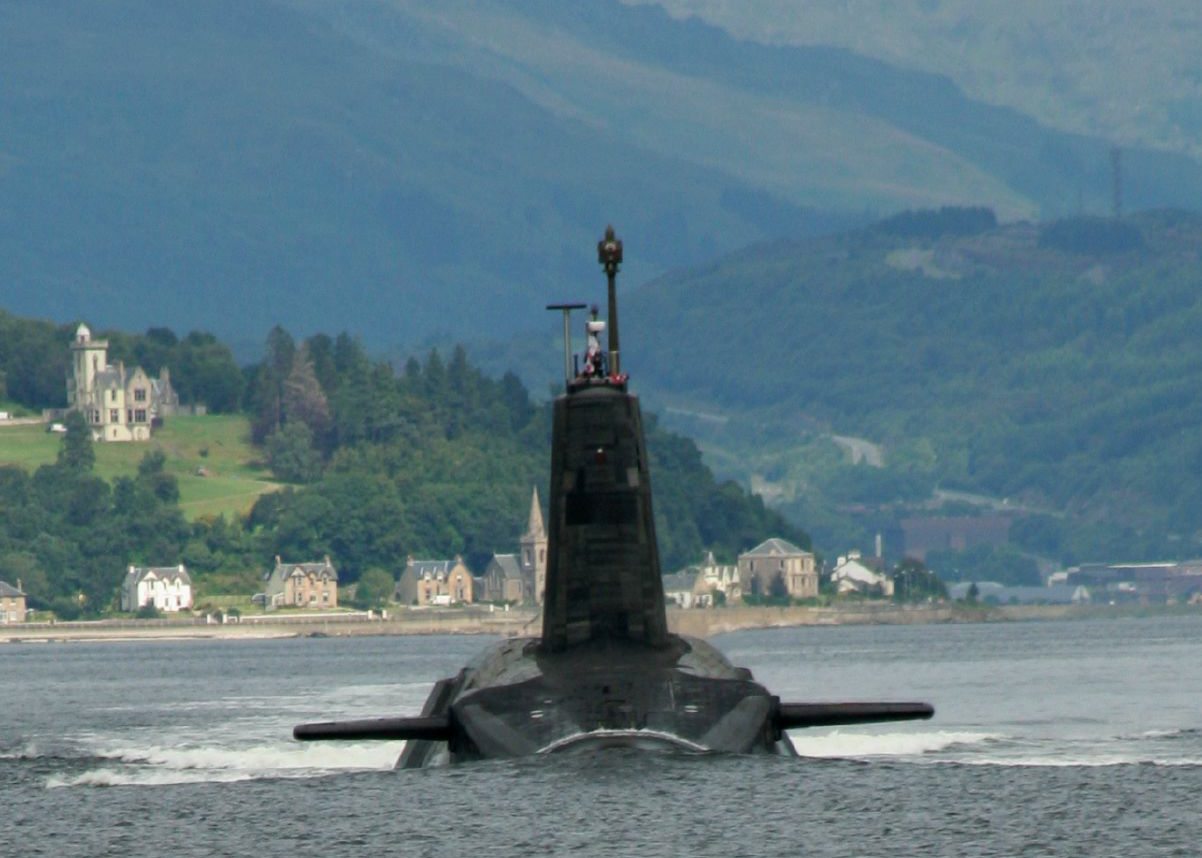
Britain’s nuclear deterrent is a continuously at-sea nuclear weapons system made up of four Vanguard-class submarines. Referred to as our country’s ‘ultimate insurance policy’, it is capable of launching the most destructive instrument of death created by man to anywhere in the world. To no one’s surprise such a powerful weapon doesn’t come cheap: roughly £2.4 billion a year (around 5-6% of the annual defence budget) is spent on maintaining the system. However, the current generation of submarines will begin to reach the end of their working lives by 2020 and contention arises over whether they should be renewed, the estimated cost of which is £17.5 to £23 billion.
Both the Conservative and Labour Party have committed themselves to renewing the system although Labour’s stress on its desire for a ‘minimum’ deterrent has left the door open to reducing the number of submarines to three or even two. The ambivalence of Labour’s position, coupled with the likely prospect of a hung parliament, has resulted in fears among the Tory ranks that in Miliband’s desperate bid for power he will strike a deal with the anti-Trident SNP, putting renewal at risk. Nicola Sturgeon own’s comments in the recent leaders’ debate that scrapping Trident renewal was a ‘red line’ on going into coalition with Labour and that she wanted to see a ‘bolder’ (substitute ‘bolder’ for ‘more left-wing’) Ed Miliband has only cemented these fears.
Michael Fallon claimed in his speech that failing to create a new fleet of ballistic missile-carrying submarines will weaken national security and play into the hands of Britain’s enemies. “We live in an increasingly dangerous world”, he said, pointing to the persistency of international terrorism and Vladimir Putin’s disregard for international law. However, the recent bedfellows of the government, the Liberal Democrats, have retorted by stating that the threats of the 21st century are entirely different from those of the Cold War, and nuclear warheads are not capable of protecting Britain from individual terrorists. The Greens have similarly declared that environmental protection and violations of human rights are the security issues of the day; Trident is nothing but a relic of the past. However, it is noteworthy that Russian revisionism in the Ukraine is absent from these critiques.
Although the Lib Dems have stopped short of calling for the abolition of Trident in its entirety, the other smaller parties – the SNP, the Greens and Plaid Cymru – have all committed themselves to the ideal of unilateral disarmament, arguing that the cost of maintaining such a weapon is too great and that the money could be better spent on reversing Tory austerity. UKIP is the only party other than the Conservatives to have made a solid commitment to full, unadulterated renewal of the system, though in a fashion reminiscent of Colonel Blimp they have queried the Conservative’s sincerity to national security, pointing to their refusal to commit to meeting NATO’s annual defence spending target of 2%. Their defence spokesman Mike Hookem (which is perhaps an apt name for their desired style of foreign policy) has accused Tory austerity of starving the armed forces of essential resources and has pledged to spend £16 billion more on defence than the Conservatives.
Regardless of the main parties’ commitments, the rise in prominence of the smaller parties and the increasing likelihood that Westminster will lack a single-party government for the foreseen future has meant that a progressive alliance could potentially summon the legislative strength of sixty MPs (SNP, Green and Plaid Cymru) to disrupt Trident renewal. Recent comments made by member of the shadow cabinet, that Labour secretly wants to get rid of it but fears the public backlash, gives Fallon’s fears more credence.
In the event that Britain is without a deterrent, our place in the world would have to be seriously reconsidered. The USA has already stated that the ‘special relationship’ would crumble into irrelevance and it would no doubt turn its attention southwards, regarding France as of chief importance to the region’s security instead. Failure to renew Trident will deliver the coup de grâce to British power. The question we must ask is whether this is long overdue or if Britain still has a vital role to play on the international stage.
Photograph: Wikipedia