
Our right to freedom of speech is non-negotiable
Adam Carnall is the president of the Durham Atheist, Secularist and Humanist Society (DASH) and the Membership Officer of the National Federation of Atheist, Humanist and Secular Student Societies (AHS)

By Adam Carnall
Yesterday morning in Paris an appalling crime was perpetrated against the staff at Charlie Hebdo and several police officers, as well as their families and friends. The purpose of this article is to speak about the implications of this crime for free speech; however it is only appropriate to begin by expressing my deepest sadness and sympathy for the victims, their families and friends.
Even with internet based outrage so commonplace in this day and age, the reaction to this event has been unlike anything else I have witnessed. I hope some small degree of comfort can be gained by those affected from seeing the millions of people coming together to express their sympathy, and to condemn this evil and senseless act.

In attempting to write this article I have discovered both how easy it is to criticise the reactions of others to this event, and how hard it is to make any substantive contribution of one’s own. Speak too softly and risk being labelled as unfeeling or even cowardly, or speak too harshly and risk bringing violence down upon oneself. It is no wonder that the national media are hesitant to publish the material that staff at Charlie Hebdo were killed for spreading.
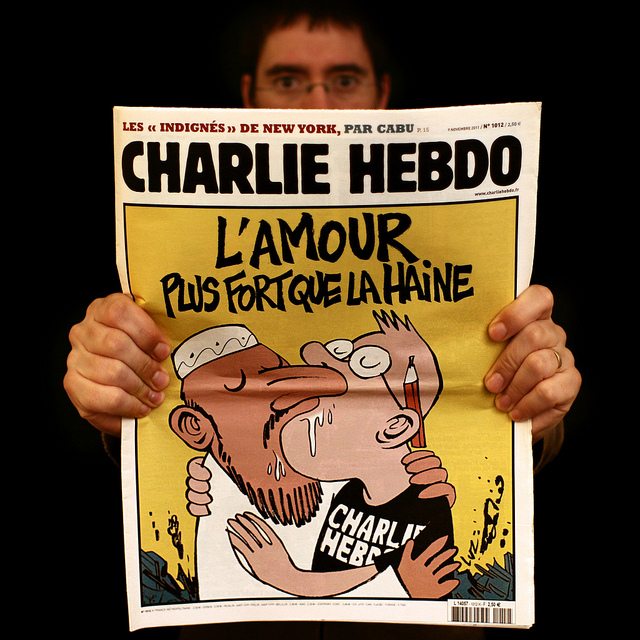
Whilst I do not pretend to have ever faced threat on the level that individuals involved in the national media must feel, as the President of a university atheist society I am no stranger to worrying that my actions will be interpreted as offensive. However, as often as not, censorship does not come from those claiming offence, but from those who worry that others may interpret certain actions as offensive.

There are two things I’ve learned about censorship since becoming President of DASH, firstly that no matter how benign you think you’ve made your publicity material, someone will always take offence, and secondly that when attempted censorship comes, it’s often from completely unexpected places. A silly example of this is the recent complaint the Durham Atheist, Secularist and Humanist Society received from several slightly batty college chaplains, who didn’t like the fact we were mocking Scientology. Far more serious was the incident a couple of years back when the LSE atheist society were thrown out of their fresher’s fair by their students’ union for wearing t-shirts depicting Mohammad.

This self-censorship within society is highly insidious and, if left unchecked, adds up to much the same thing as explicit censorship perpetrated by a government or established religious organisation. To combat this kind of creeping censorship is, to my mind, the greatest argument for republishing of material which some have deemed offensive, and I am delighted that Palatinate has agreed to publish some of the material produced by Charlie Hebdo in solidarity with them.

Moments like these are important times to stop and think. When such a barbaric act is committed, it throws into sharp relief the need for a society in which freedom of speech is regarded as a basic human right. I hope that if anything good can come from the terrible tragedy which took place in Paris yesterday, it is that we all come together to renew our commitment to the freedom of speech we enjoy, which has been so hard won, and was yesterday shown to be still so fragile.
#JeSuisCharlie
 Cartoons: Charlie Hebdo
