
London Met University in visa scandal

The Government continues to defend its decision to ban London Metropolitan University from hosting international students from outside the EU.
Last month, the establishment lost the ability to sponsor the foreign students following an investigation by the UK Border Agency (UKBA), a bureau that has subsequently come under fire for failing to implement a new visa system successfully.
Part of the Home Office, the UKBA raised concerns about students not attending courses or having the required level of English language skills. The UKBA also found that a large proportion were here illegitimately, with a quarter of a 101 student sample still in the country despite having had their visas revoked. Two further samples covering 600 students found problems in 60 per cent of cases, with the issues ranging across a spectrum of language and visa areas.
Damian Green, the immigration minister, said the figures showed the problems were not isolated to London Met, and that there had been a systemic failure by the UKBA as well. Facing calls to allow students to finish their degrees, he defended the injunction, telling MPs: “Institutions must comply with the rules, whether they sponsor 10, 100 or 1,000 international students.”
The 2,000 students in question face deportation if they cannot find an alternative sponsor in the next three months. However, the government has committed £2m of funds to a ‘task force’ aimed at helping affected students find places on other courses.
Following the ban, last month the Commons Public Accounts Committee published a report investigating the UK Border Agency and its “unacceptable” failure to act quickly enough on abuses in the system, or to remove bogus students from the country. London Metropolitan is a prime example both of their failures, and their ensuing crackdown as officials play ‘catch-up’ in an attempt to rectify their mistakes.
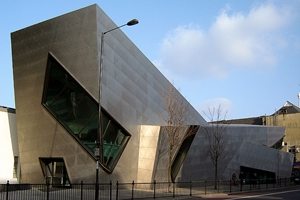
Photograph:Fin Fahey
The problems stem from the 2009 introduction of a new visa system. Prior to the new procedure, it was the responsibility of immigration officers to evaluate the legitimacy of foreign students. This was replaced by the current system where the onus is on the colleges or universities to prove their students are in the country rightfully.
The old checks were removed before the new ones were completely in use, with some aspects not fully operational until a year later, the CPAC said.
As a result, in 2009 between 40,000 and 50,000 migrants came to the UK and worked illegally, whilst assuming student status, according to the report. The figures are based on estimates by the National Audit Office and correspond to 16 per cent of the 313,000 foreign students who were granted visas to study in that year.
Margaret Hodge, chairwoman of the committee, said: “It is extraordinary that the UK Border Agency introduced its new points based system for students before proper controls were in place to replace the old ones.”
Although many higher education institutions have watched events unfold with growing unease, a statement from Durham University remained confident in their checks.
Professor Tom Ward, Pro-Vice Chancellor for Education, commented: “All students meet the same or equivalent standards of entry. We work closely with the UK Border Agency to ensure that we have the necessary policies and procedures in place to meet all the UKBA requirements.”
Similarly, Chulachat Kanjanaoransiri, a 3rd year Durham international student, commented: “Checks on international students are quite strict. However, the UKBA should be careful and considerate when revoking a right to sponsor non-EU students as implications can be quite severe. At the same time, if you are a genuine student, I don’t think there is anything to fear.”
Photograph: Anni Pekie