
Celebrities should not be shocked by consequences
by Cressida Peever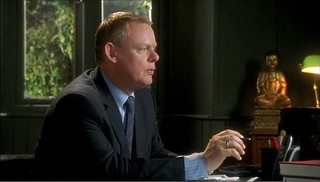
Last November, Martin Clunes was dropped as the face of Churchill following a driving ban, which he acquired for four separate speeding offences, meaning that he had reached the maximum twelve-point limit on his driving licence.
Clunes told the latest issue of the Radio Times that he ‘was very surprised by their reaction’ to cut him loose, but surely he should have presumed that this would be the outcome; it would be highly ironic to have car insurance endorsed by an individual unable to use it himself.
Indisputably, companies only use celebrity endorsement to tempt buyers because they believe that their target market respects or aspires to emulate that celebrity. Even more than this, they allow the audience to infer that the celebrity is better off for using their product. Hence, having Cheryl Cole swish her hair around is more useful to L’Oreal than to have Wayne Rooney bestow the company’s virtues, despite how passionately he may feel about their shampoo.
Although it may be patronising for advertisers to believe that the British public are gullible enough to buy a product purely because it will make them become like a certain celebrity, it is understandable that one might be put off a product due to being unsupportive of the famous face endorsing it. When Martin Clunes became associated with bad driving, Churchill had to disassociate itself from him, lest the company be linked to bad driving as well.
Perhaps this firing has taught Clunes the lesson that he clearly failed to learn from the first three times he was caught speeding. Conversely, if Clunes were of non-celebrity status, his conviction would not be a national discussion point. This sacking implies that celebrities have a duty to be role models to the general public, and that when this responsibility is flouted they should be punished.
Becoming a celebrity is getting easier. All it takes nowadays is half an hour in the Big Brother House and they’ll be begging you to write an autobiography at the tender age of twenty-one. However, these throwaway celebrities appear to have less of a responsibility to be upstanding citizens. In fact, their bad behaviour is practically encouraged on reality television to boost audience viewing.
So why is it that advertising is different? It must be more than just the fact that companies have money to lose from inappropriate PR. Perhaps it is the idea that whilst watching reality television, the audience is aware that the situations can be contrived and circumstances are exacerbated to create ‘entertainment’. On some level, the spectator knows that the celebrity in front of the camera is demonstrating a public persona.
In the Churchill adverts, Clunes’s persona was a comical reflection of the average man watching that advert. Therefore, his misdemeanor drives the general public to feel as though their trust has been violated; it is as though the spectator has committed an offence by being able to relate to the character that Clunes portrays in the adverts. Association with the crime has tainted the product that they were told to buy. The shattering of our illusions is the real reason for our offence.
It could be argued that the recent Jimmy Savile case has received such a violent reaction not only because of the incredibly serious nature of his crimes, but also because for so many years he had deceived the public into considering him virtuous. Perhaps public hatred is greater for a criminal who masqueraded as a saint, than for a criminal who gave us no illusions.
Although Clunes’s driving offences are unlikely to ruin his reputation, it is clear that public trust is a delicate matter. If celebrities construct their public facades to imply that they are righteous, infallible beings, then their fall will no doubt be greater than those whom the public already knows to be full of flaws. Luckily, Clunes has not built his career on the reputation of a saint, and this incident is unlikely be one that defines his career, other than the fact that he will probably not be invited to endorse car insurance again.
[poll id=”8″]